
Many people believe they only need one more thing:
Does this sound familiar?


the right couch
the perfect wall paint
a new lamp
a beautiful carpet
But most of the time the problem lies somewhere else entirely.
You already have:
✓ Bought furniture and later regretted it
✓ Colors selected that suddenly create a completely different atmosphere at home
✓ Rooms rearranged multiple times
✓ Countless Pinterest ideas saved
✓ Money invested without achieving the desired result
And every time, the same question remains:
The answer is simpler than many people think.
Because beautiful spaces don't happen by chance.
Why does it work for others but not for me?
The right equipment is not lacking.
The concept is missing.

Most people solve the wrong problem.
If a room isn't working, most people buy:


new color
new materials
But the real problem remains.
Why?
Because individual decisions cannot replace an overall concept.
new furniture
new decoration
A home is not created by beautiful furniture.
A home is created through harmony.
Through structure.
Through atmosphere.
Through the interplay of all elements
That's precisely why many rooms feel "almost right".
But only almost.
The 3 decorating mistakes I see in almost every apartment
Mistake No. 1: Furniture instead of concept
Many people buy furniture first.
Interior designers first plan the effect of the space.
That is a crucial difference.
Mistake No. 2 - Incorrect lighting design
People often spend thousands of euros on furniture.
But light remains a product of chance.
Light plays a crucial role in determining whether a room feels cozy or not.
Mistake No. 3 - Too many ideas at once
Pinterest.
Instagram.
Home magazines.
Friends.
Family.
Everyone gives advice.
The result:
A room full of beautiful ideas.
But without a clear direction.
Why Pinterest often creates more confusion than clarity
Pinterest is a wonderful source of inspiration.
But there's a catch.
Most people see finished rooms.
What they don't see:
√ Room size
√ Lighting conditions
√ Budget
√ Floor plan
√ Usage
√ Individual needs
Therefore, a room on Pinterest won't automatically work in your home.
Many people store hundreds of ideas.
And as a result, they become increasingly insecure.
Because every new idea contradicts the previous one.
Inspiration is no substitute for planning.
What interior designers see that others overlook
What I learned from planning large office spaces
Imagine ...
When you enter a room, you might think:
"Something feels uncomfortable here."
I see:
√ false lines of sight
√ unfavorable proportions
√ inconsistent color schemes
√ poor lighting
√ wasted floor space
√ missing structure
And this is precisely where most of the problems arise.
Not because people have no taste.
But because they cannot see connections that one only recognizes through experience.
Many believe that good spatial planning is only important for large projects.
In fact, the opposite is often true.
The smaller a room is, the more important every detail becomes.
During my time working in architecture and planning offices, I had the opportunity to design large office spaces.
There I learned:
√ Every square meter has a purpose.
√ Every area needs structure.
√ Every decision affects the overall result.
I use exactly this knowledge today for living spaces.
Because people spend a large part of their lives within their own four walls.
And these shouldn't just work.
They should feel good.
√ You open the door.
√ The room feels calm.
√ Harmonic.
√ Well thought out.
√ The colors match.
√ The furniture looks natural.
√ The lighting creates atmosphere.
√ Nothing seems random.
√ Nothing looks cluttered.
√ They feel they've arrived.
This feeling is precisely the goal of good interior design.

Perhaps you are thinking...
"My room is too small."
Small rooms in particular benefit from professional planning.
"I've already tried everything."
That's precisely why a fresh perspective is often worthwhile.
"This is bound to be expensive."
The initial consultation is free.
Then you decide for yourself what kind of support you want.
"I have no sense of decor."
You don't need to have that.
That's what I'm here for.
This is how your personal feel-good space is created
Step 1 – Free introductory meeting
We'll discuss your wishes and challenges.
Step 2 – Analysis
Together we will consider your spaces and possibilities.
Step 3 – Individual room concept
A concept that fits your life perfectly.
Step 4 – Moodboard & Design Vision
Colors, materials, furniture and light are harmoniously coordinated.
Step 5 – Implementation
You will receive clear recommendations for successful implementation.

Which path suits you best?


Frequently Asked Questions
Can the consultation take place online?
Yes.
Do I need to buy new furniture?
No.
For which rooms is this plan suitable?
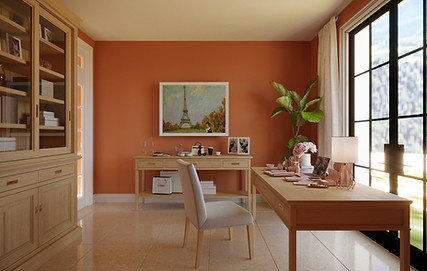
Living spaces, home offices, offices, holiday apartments and outdoor areas.
How does the free initial consultation work?
Non-binding, personal and tailored to your situation.